He Paid for the Revolution, Then Went to Jail: Robert Morris
He signed the Declaration, the Articles and the Constitution, and his own credit kept the army moving. A few years later he was sleeping in a Philadelphia prison for debt.
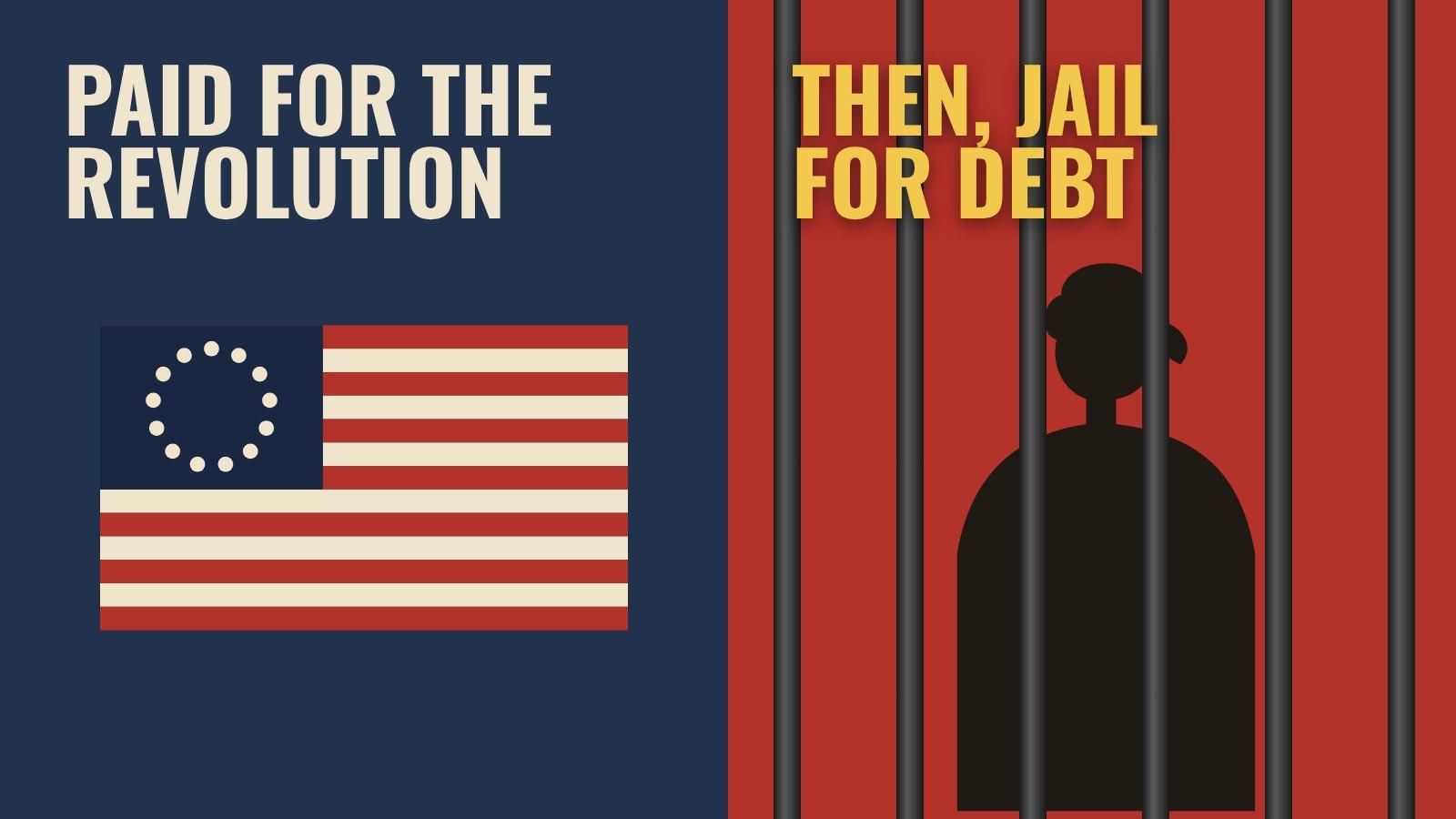
- Robert Morris was born in Liverpool, England, in January 1734 and became one of Philadelphia's richest merchants.
- He and Roger Sherman are the only two men who signed the Declaration of Independence, the Articles of Confederation and the Constitution.
- Congress made him Superintendent of Finance in 1781, when Continental paper money traded at 100 dollars or more for one silver dollar. He served until November 1784.
- He issued about $1.4 million in notes backed by his own credit, and his credit helped pay for the army's march to Yorktown in 1781.
- His plan for the Bank of North America went to Congress in May 1781, and the bank opened in January 1782.
- In 1795 he helped form the North American Land Company, which claimed about six million acres. Land sales collapsed, and he owed an estimated $3 million.
- He was held in Philadelphia's Prune Street debtors' prison from February 1798 to late August 1801, and was freed under the Bankruptcy Act of 1800.
- He died in Philadelphia on May 8, 1806.
1 · The merchant
Robert Morris was born in Liverpool, England, in January 1734. As a teenager he crossed the Atlantic to join his father in Maryland, then went to work for the Willing family's trading house in Philadelphia. He was good at it. By his twenties he was a partner, and Willing, Morris and Company became one of the biggest merchant firms in the colonies.
He was not an early rebel. In Congress he thought independence was premature. On July 1, 1776, he voted against it, and on July 2 he stayed away from the vote so Pennsylvania could say yes. He signed the Declaration anyway that August. He later signed the Articles of Confederation and, in 1787, the Constitution. Only one other man, Roger Sherman of Connecticut, signed all three.
2 · The Revolution's money man
By 1781 the Revolution was broke. Congress had paid for the war by printing Continental dollars, and they had fallen so far that it took 100 to 350 of them to buy one Spanish silver dollar. That spring Congress made Morris Superintendent of Finance.
His fix was to lend the country his name. He issued notes signed by him and backed by his personal credit, about $1.4 million of them. People who wouldn't take the government's paper took Morris notes. In May 1781 he also sent Congress a plan for a national bank, and the Bank of North America opened in Philadelphia in January 1782.
People who wouldn't take the government's paper took Morris notes.
That summer, George Washington and the French decided to march south to trap the British in Virginia. The army had no money to move. Morris found it, with his own credit, loans from friends and help from France. In October 1781 the British surrendered at Yorktown. Morris stayed in the job until November 1784, then spent six years as one of Pennsylvania's first U.S. senators.
3 · The land bet
After the war Morris went big on land. He bought lots in the new federal city on the Potomac and huge tracts out west and south. In 1795 he formed the North American Land Company with partners John Nicholson and James Greenleaf. On paper it held about six million acres across six states.
Then the market turned. Europe was at war, foreign buyers stopped coming, credit dried up in the Panic of 1796 to 1797, and a lot of the land had shaky titles or wasn't worth much. Morris borrowed to cover what he'd borrowed before. Meanwhile he was building a marble mansion in Philadelphia, designed by Pierre L'Enfant, that he never finished. People called it Morris's Folly.
Maybe the man who saved the nation's credit thought his own could never run out. That's just speculation, but he kept signing notes long after the land stopped selling.
4 · Prune Street
By early 1798 his creditors had had enough. He owed an estimated $3 million. That February he was locked up in the Prune Street prison, the debtors' wing next to Philadelphia's Walnut Street Jail. Under Pennsylvania law, a person who couldn't pay could be held until the debt was settled, and his never could be.
What got him out was Congress. The Bankruptcy Act of 1800, the country's first federal bankruptcy law, let people like Morris be declared bankrupt and released. He walked out in late August 1801, after three and a half years inside.
He lived quietly in a small house in Philadelphia on an annuity for his wife that his friend Gouverneur Morris (no relation) helped arrange, and died on May 8, 1806. According to the National Constitution Center, he owned little more than an old gold watch.
Sources give slightly different dates for his release in August 1801 and different totals for his debts. Where they differ, this story gives the range.
Sources
Every fact in this story was checked against these sources on Nov 28, 2026. Lines that start with "maybe" are just our own guesses.
- Robert Morris, Jr., National Constitution Center
- Robert Morris, financier of the Revolutionary War, History.com
- Robert Morris (signers of the Declaration), National Park Service
- Robert Morris, Historical Society of Pennsylvania
- Continental Currency: Devaluation, University of Notre Dame, Coins and Currency collection
- Morris, Robert (1734-1806), Encyclopedia.com
- Supplying the Means: The Role of Robert Morris in the Yorktown Campaign, Journal of the American Revolution
- Robert Morris: The Financier of the American Revolution, American Battlefield Trust
- MORRIS, Robert, U.S. House of Representatives, History, Art and Archives
- Robert Morris (financier), Wikipedia
- Bankruptcy Act of 1800, Wikipedia
- Panic of 1796–1797, Wikipedia
- Editorial note on Robert Morris's release and the annuity for Mary Morris, Founders Online, National Archives (Hamilton Papers)
How we make our stories: researched and fact-checked by CoinNCountry, with AI tools helping with drafting, art and narration. More about our process.