$480 Million on a Slip of Paper! How Andrew Carnegie sold his steel, then gave the money away
A bobbin boy who earned $1.20 a week sold his company for a number on a scrap of paper, and spent the rest of his life trying not to die rich.
- Andrew Carnegie was born in Dunfermline, Scotland, on November 25, 1835, and his family emigrated to the Pittsburgh area in 1848.
- His first job in America was as a bobbin boy in a cotton mill, for $1.20 a week.
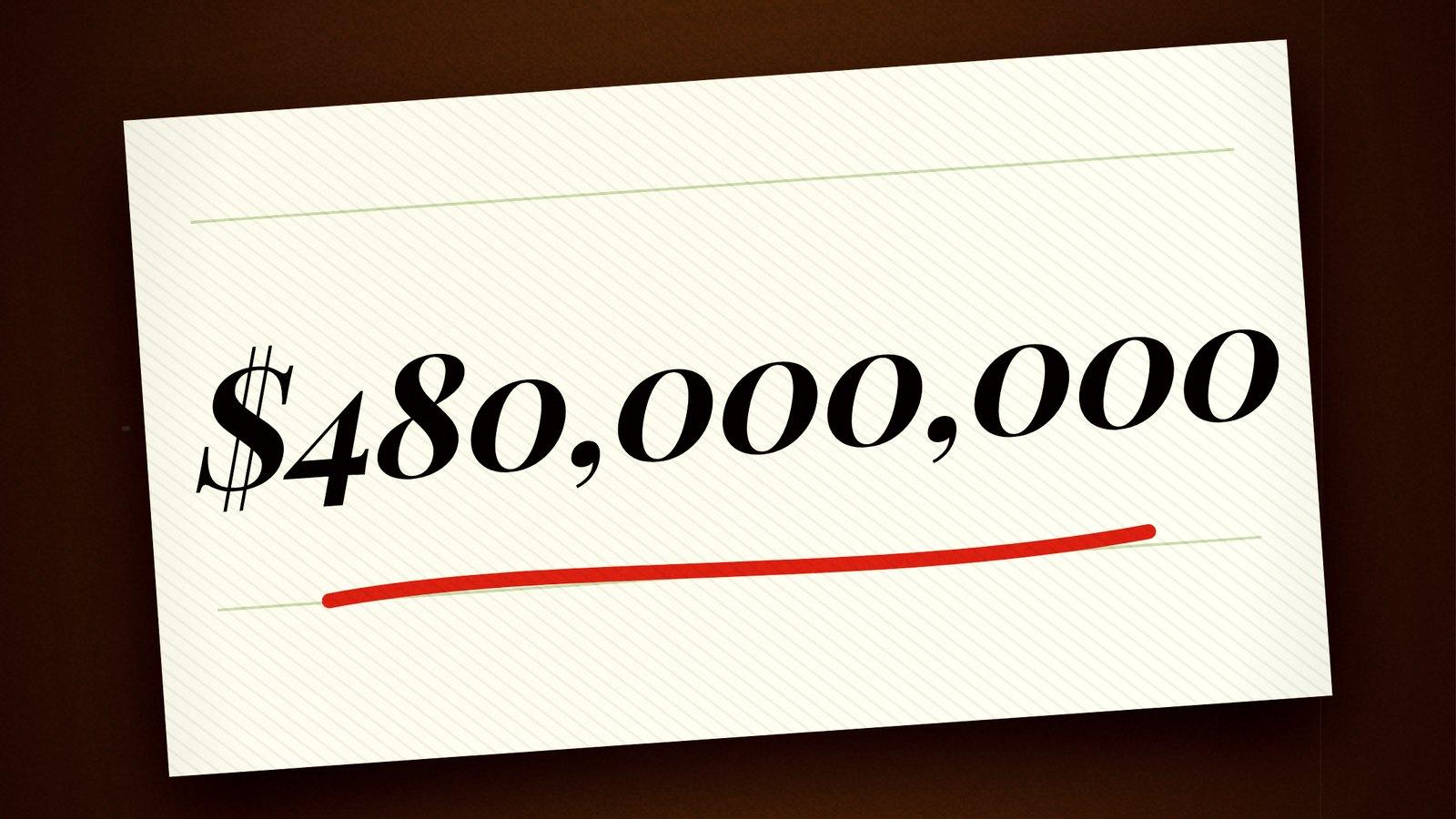
- In 1901 he sold Carnegie Steel to J.P. Morgan for $480 million. His own share was about $225.6 million.
- Morgan merged it into U.S. Steel, capitalized at $1.4 billion, the first billion-dollar corporation.
- Carnegie gave away more than $350 million before he died in 1919, including money for thousands of public libraries.
1 · The bobbin boy
Andrew Carnegie was born on November 25, 1835, in Dunfermline, Scotland, the son of a hand-loom weaver. Power looms were putting weavers like his father out of work, and in 1848 the family sailed for America and settled in Allegheny, Pennsylvania, across the river from Pittsburgh.
At 12 he went to work in a cotton mill as a bobbin boy, changing spools of thread for $1.20 a week. Next came a job at a bobbin factory, then work as a telegraph messenger boy. He got fast enough at reading telegraph signals that Thomas A. Scott of the Pennsylvania Railroad hired him as his personal telegrapher and secretary.
The railroad was his real school. Scott let him in on investments, and Carnegie put money into sleeping cars, bridges, iron and oil. By his early thirties he was rich, and he hadn't touched steel yet.
2 · Then steel
Carnegie had watched the Bessemer process turn iron into steel on trips to Britain. In 1875 he opened the Edgar Thomson Steel Works in Braddock, Pennsylvania, named after the president of the Pennsylvania Railroad, which happened to be a big buyer of steel rails.
His method was simple to say and hard to copy: buy the newest machines, cut costs every year, and buy up the mines, ore boats and railroads that fed the mills. By the 1890s Carnegie Steel was one of the biggest steel companies in the world.
3 · Homestead
In the summer of 1892, Carnegie was in Scotland. His partner Henry Clay Frick ran the business, and the union contract at the Homestead mill was running out. Frick locked the workers out, built a fence around the plant, and hired about 300 Pinkerton agents to come up the river on barges.
On July 6, 1892, armed workers met the barges. Sources give different death tolls; the AFL-CIO counts seven workers and three Pinkertons killed. A few days later the Pennsylvania state militia took over the town, the mill reopened with replacement workers, and the union was broken at Homestead.
Carnegie stayed in Scotland through it. Critics said he let Frick do the dirty work, and his reputation never fully recovered with workers.
4 · The slip of paper
By 1901, J.P. Morgan wanted to merge the steel industry into one giant company, and Carnegie was in the way. Carnegie's president, Charles M. Schwab, carried the question to him. As American Heritage tells it, Carnegie thought about it overnight and handed Schwab a slip of paper with his price on it: $480 million. Morgan looked at it and accepted.
Most accounts give $480 million; a few put the total near $492 million, depending on how the bonds and stock are counted. Carnegie's own share, according to Britannica, was $225.6 million. The story goes that Morgan shook his hand and congratulated him on being the richest man in the world. The exact words come from later retellings.
Morgan rolled Carnegie Steel and other companies into United States Steel Corporation, incorporated in February 1901 with a capitalization of $1.4 billion. It was the first billion-dollar corporation. A federal study later estimated the actual assets at far less, about $682 million.
5 · Giving it away
Twelve years before the sale, in an 1889 essay called "Wealth," later known as "The Gospel of Wealth," Carnegie wrote that rich men should give their fortunes away while they were alive. The line people remember: "The man who dies thus rich dies disgraced."
After 1901 he tried to live up to it. He funded public libraries (2,509 were built with his money and his foundation's between 1883 and 1929, 1,679 of them in the U.S.), plus Carnegie Hall, Carnegie Mellon University's forerunner, the Carnegie Institution for Science and, in 1911, the Carnegie Corporation of New York. By the time he died in Lenox, Massachusetts, on August 11, 1919, he had given away more than $350 million.
Maybe the libraries were his way of settling the bill for Homestead. That's just speculation, and he never put it that way.
Hero, villain, or just a very good closer?
Sources differ on a few numbers, including the sale price ($480 million in most accounts, about $492 million in some) and the Homestead death toll. Where they differ, this story says so.
Sources
Every fact in this story was checked against these sources on Nov 28, 2026. Lines that start with "maybe" are just our own guesses.
- Andrew Carnegie, Encyclopaedia Britannica
- Carnegie Steel Company, Encyclopaedia Britannica
- Andrew Carnegie: Rags to Riches timeline, PBS American Experience
- The Homestead Strike, PBS American Experience
- 1892 Homestead Strike, AFL-CIO
- The Deal of the Century, American Heritage
- Morgan Assembles the World's Largest Corporation, EBSCO Research Starters
- The Andrew Carnegie Story, Carnegie Corporation of New York
- Andrew Carnegie, Philanthropy Roundtable
- Japan's Nippon Steel completes its U.S. Steel takeover, Axios
- Nippon Steel completes $14.9B US Steel takeover, Mining.com
How we make our stories: researched and fact-checked by CoinNCountry, with AI tools helping with drafting, art and narration. More about our process.