Longer Than the Great Depression! The Panic of 1873 and the day Wall Street closed
Jay Cooke helped pay for the Civil War. Then he bet his bank on one railroad, and the slump that followed outlasted the Great Depression's.
- Jay Cooke and Company, the Philadelphia bank that sold hundreds of millions of dollars in Union bonds during the Civil War, failed on September 18, 1873.
- Its fall came from the Northern Pacific Railway, whose bonds it had agreed to sell and couldn't.
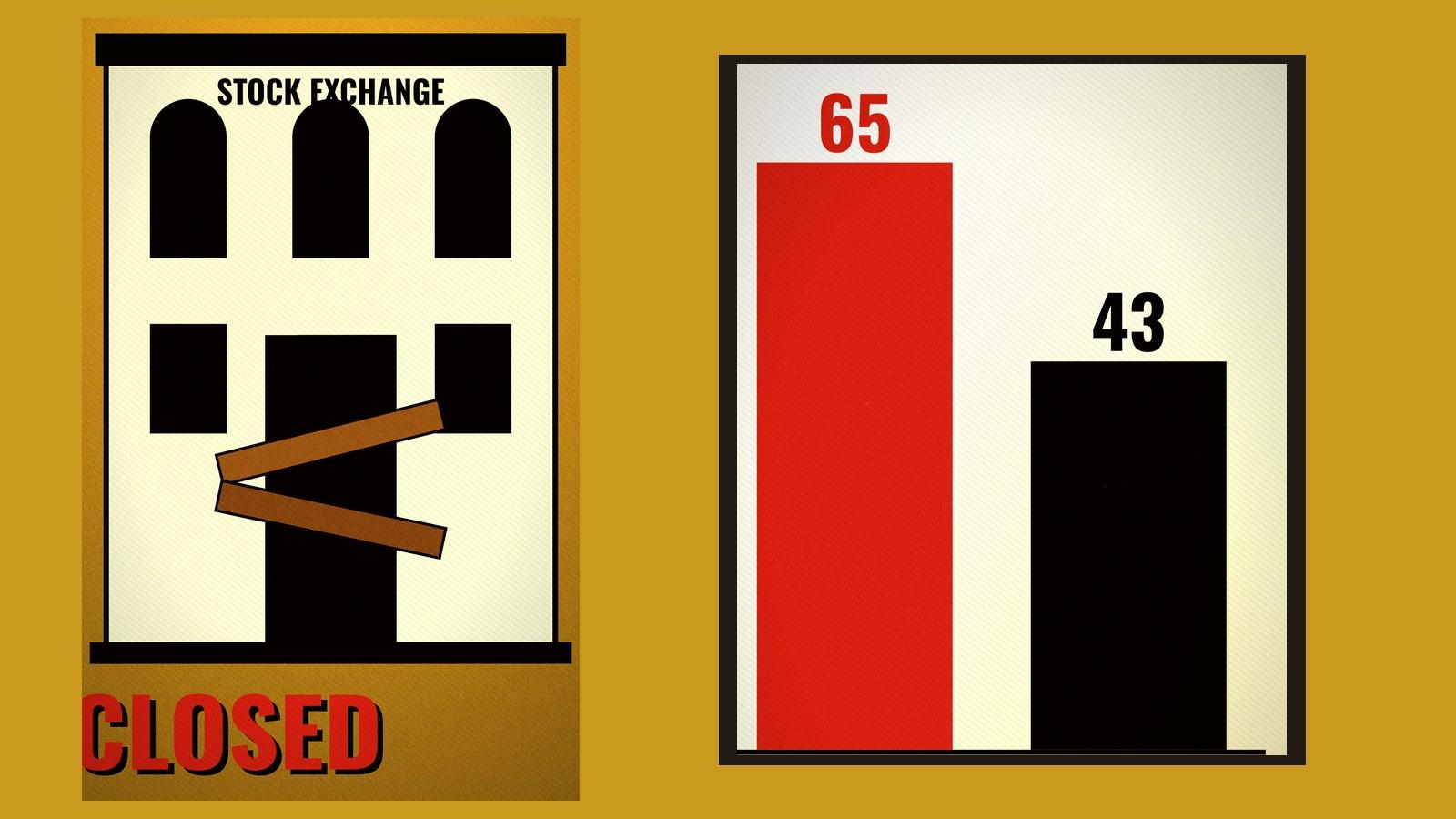
- On September 20, 1873, the New York Stock Exchange closed in response to a panic for the first time in its history. It stayed shut for about ten days.
- 89 of the country's 364 railroads went bankrupt, and about 18,000 businesses failed in roughly two years.
- The National Bureau of Economic Research dates the recession from October 1873 to March 1879: 65 months, the longest contraction in its records. The 1929 to 1933 contraction lasted 43.
1 · The man who sold the war
Jay Cooke was a Philadelphia banker who figured out how to sell a war. During the Civil War his firm, Jay Cooke and Company, sold hundreds of millions of dollars in Union government bonds, and it sold them to ordinary people across the North, not just to big investors.
That made Cooke famous and trusted. When his name was on a bond, people bought it. After the war he went looking for the next big thing to sell, and in the 1870s nothing was bigger than railroads.
2 · One railroad
In 1870 Cooke's firm became the exclusive bond agent for the Northern Pacific Railway, a line meant to run from Lake Superior to the Pacific Northwest. The bank borrowed and spent against bonds it expected to sell later.
The bonds didn't sell well. Investors worried there were already too many railroads, the Northern Pacific's costs kept running over, and the Crédit Mobilier scandal had made people distrust railroad money in general. In May 1873 the Vienna stock exchange crashed, and European money for American railroads got harder to find.
When his name was on a bond, people bought it. Until they didn't.
3 · The week it broke
On the evening of Monday, September 15, 1873, President Ulysses S. Grant was Cooke's dinner guest at Ogontz, his mansion outside Philadelphia. Historians don't know exactly what the two men talked about.
On Thursday, September 18, Jay Cooke and Company closed its doors. Panic spread to New York, and other banks and brokers failed in the days that followed.
On Saturday, September 20, the New York Stock Exchange did something it had never done: it shut down because of a panic. It stayed closed for about ten days.
Grant and Treasury Secretary William Richardson went to New York to meet with bankers. The Treasury bought government bonds, and accounts of how much range from about $10 million to $13.5 million. It also released about $26 million in greenbacks from its reserve, a move whose legality was questioned at the time. It wasn't enough to stop the slide.
4 · The long slump
The damage spread far past Wall Street. 89 of the country's 364 railroads went bankrupt, and about 18,000 businesses failed in roughly two years. Unemployment estimates for the 1870s vary a lot; PBS puts it at 14 percent by 1876, and other estimates run lower.
On January 13, 1874, about 7,000 unemployed people gathered in Tompkins Square in New York City to ask for public work. Mounted police broke up the crowd with clubs. That April, Grant vetoed a bill that would have put more paper money into circulation, believing that inflating the currency was dangerous.
The slump also took down the Freedman's Savings Bank, which had been set up for formerly enslaved people and their families. Frederick Douglass became its president in March 1874, hoping to save it, and found it couldn't be saved. It closed in late June or early July 1874, depending on the source, owing about $3 million to more than 61,000 depositors.
The National Bureau of Economic Research, which dates American recessions, says this one ran from October 1873 to March 1879. That's 65 months, the longest contraction in its records. The slide from 1929 to 1933 lasted 43 months. The Great Depression was deeper, but the 1870s slump was longer.
5 · What happened to Cooke
Cooke went bankrupt, and Ogontz was closed up the next year. Then he came back. By 1880 he had paid off his obligations, and an investment in the Horn Silver Mine in Utah made him rich again; he sold his shares for an estimated $1 million. He died in 1905.
Maybe a man who had helped pay for a whole war figured one railroad couldn't sink him. This is just speculation, but it would fit the New York Fed's finding that his firm knew it was in trouble at least a year before it failed, and kept going anyway.
The Great Depression was deeper. The 1870s slump was longer.
Sources disagree on some numbers from this depression, especially unemployment and how much the Treasury spent in the first week. Where they differ, this story gives the range.
Sources
Every fact in this story was checked against these sources on Nov 28, 2026. Lines that start with "maybe" are just our own guesses.
- How One Robber Baron's Gamble on Railroads Brought Down His Bank and Plunged the U.S. Into the First Great Depression, Smithsonian Magazine
- The Panic of 1873, PBS American Experience
- Banking Panics of the Gilded Age, Federal Reserve History
- Crisis Chronicles: The Long Depression and the Panic of 1873, Federal Reserve Bank of New York, Liberty Street Economics
- Panic of 1873, Harvard Business School, Baker Library
- US Business Cycle Expansions and Contractions, National Bureau of Economic Research
- Financial Panic of 1873, U.S. Department of the Treasury
- Freedman's Bank Demise, U.S. Department of the Treasury
- Freedmen's Bank, Encyclopaedia Britannica
- Ulysses S. Grant: Domestic Affairs, Miller Center, University of Virginia
- When the Horn Silver Mine Crashed In, Utah Division of State History
- Stock Market Circuit Breakers, U.S. Securities and Exchange Commission, Investor.gov
How we make our stories: researched and fact-checked by CoinNCountry, with AI tools helping with drafting, art and narration. More about our process.